
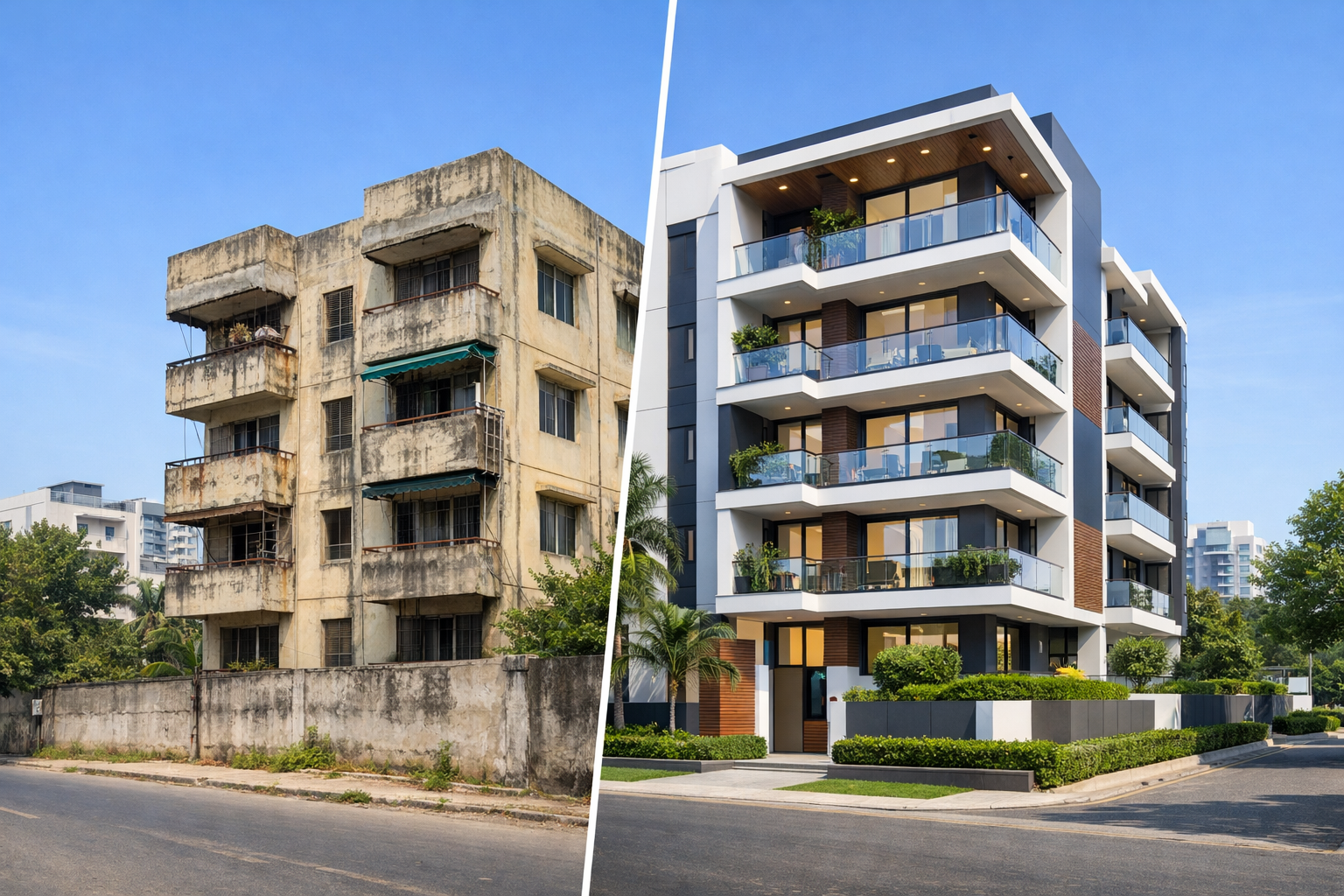
For most apartment owners, the demolition of their existing building is the most emotionally and practically significant moment in the entire redevelopment journey. It is the point at which years of discussion, documentation, and planning become physical reality. Old building demolition in Chennai is also one of the most technically demanding phases of any redevelopment project, requiring careful compliance with regulatory requirements, rigorous site safety planning, and transparent communication with every resident who has vacated their home in anticipation of what comes next. Understanding what this process involves, what permissions are required, and what residents can reasonably expect gives flat owners and housing societies a clearer picture of how a professionally managed demolition should be conducted.
Why Demolition Requires Proper Authorization
In Chennai, demolition of an existing structure is not a process that can be initiated without regulatory clearance. The CMDA and the relevant local body, whether the Greater Chennai Corporation or the applicable municipal body for the area, require that a demolition permission be obtained before any structural dismantling work begins.
The application for demolition permission is typically submitted along with or as part of the building plan approval process for the new construction. Supporting documents generally include the approved building plan for the new structure, proof of ownership and society authorization, the structural assessment report of the existing building, and in some cases, a demolition methodology report prepared by a qualified structural engineer.
Utility disconnection is a mandatory prerequisite before demolition begins. Electricity supply to the building must be formally disconnected through the TANGEDCO process. Water and sewage connections must also be formally closed with the relevant municipal authority. These steps are not optional. Demolishing a building with active utility connections creates serious safety risks and regulatory violations.
The specific documentation requirements and approval processes can vary depending on the plot classification, local body jurisdiction, and the scale of the project. Housing societies should ensure that their developer has obtained all required permissions and can produce documentary evidence of the same before demolition commences. This article provides general awareness and does not constitute legal or regulatory advice.
How Safe Demolition Is Carried Out in Urban Chennai
Demolition within Chennai’s dense residential neighbourhoods is a controlled operation that requires significantly more planning than demolition on open or isolated sites. Adjacent buildings, public roads, utility lines, and pedestrian movement all need to be accounted for in the demolition methodology.
A professionally executed demolition in an urban Chennai setting typically begins with a pre-demolition structural survey of neighbouring properties. This is a photographic and structural record of the condition of adjacent buildings before demolition begins, which protects all parties from disputes about damage that may be claimed to have occurred during the process.
Hazardous material identification is another important pre-demolition step. Older buildings in Chennai, particularly those constructed before the 1990s, may contain materials such as asbestos-based roofing sheets or insulation that require specialized handling and disposal. These materials cannot be demolished and disposed of through standard debris management channels and must be removed and disposed of in compliance with applicable environmental norms.
The demolition itself in urban settings is most commonly carried out through manual deconstruction supplemented by mechanical equipment such as excavators fitted with demolition attachments. Explosive demolition, while faster, is rarely appropriate in densely built urban areas and is subject to additional regulatory approvals that make it impractical for most residential redevelopment projects in Chennai.
Dust suppression through water spraying during demolition is a standard practice required to minimize the impact on neighbouring residents and businesses. Debris must be collected, segregated, and disposed of in accordance with the Construction and Demolition Waste Management Rules, which require that waste be sent to authorized processing facilities rather than being dumped in public spaces or water bodies.
Site hoarding and safety barriers must be erected around the demolition site to prevent unauthorized access and to protect the public from falling debris. Signage clearly indicating the nature of the work, the responsible contractor, and emergency contact details is a standard safety requirement.
What Residents Should Know Before and During Demolition
Residents should have completely vacated the building well before demolition begins. No partial occupation is safe or permissible during demolition. The developer should have confirmed that rental compensation arrangements are in place and that all families have secured alternative accommodation before the demolition date is fixed.
Residents should also collect and safely store all personal documents, valuables, and belongings that cannot be replaced. The society should maintain a clear record of the handover of the building to the developer, including the condition of common areas at the time of vacation.
How Sankar Infra Projects Manages Demolition
At Sankar Infra Projects, we treat demolition as a phase that requires the same level of planning and care as construction itself. Our process begins well before the first wall comes down. We ensure that all regulatory permissions are in place, that utility disconnections are formally completed, and that a pre-demolition survey of neighbouring properties has been conducted and documented.
Our demolition methodology is developed in consultation with qualified structural engineers and is designed to protect adjacent structures, minimize dust and noise impact on the surrounding community, and ensure that all debris is managed in compliance with applicable environmental norms. We maintain clear communication with the housing society throughout this phase, providing updates on the demolition schedule and addressing any concerns raised by residents or neighbouring property owners promptly.
Moving Forward With Confidence
Demolition marks the end of one chapter and the beginning of another for your housing society. When it is planned and executed correctly, it is a safe, orderly, and professionally managed process that sets the foundation for the new building your community will call home.
If your society is at or approaching the demolition phase of a redevelopment project, or if you are evaluating redevelopment and want to understand what the demolition process involves, Sankar Infra Projects is available to guide you. Reach out to our team for a clear, honest conversation about what to expect and how we ensure every phase of the project meets the highest standards of safety and compliance.
