
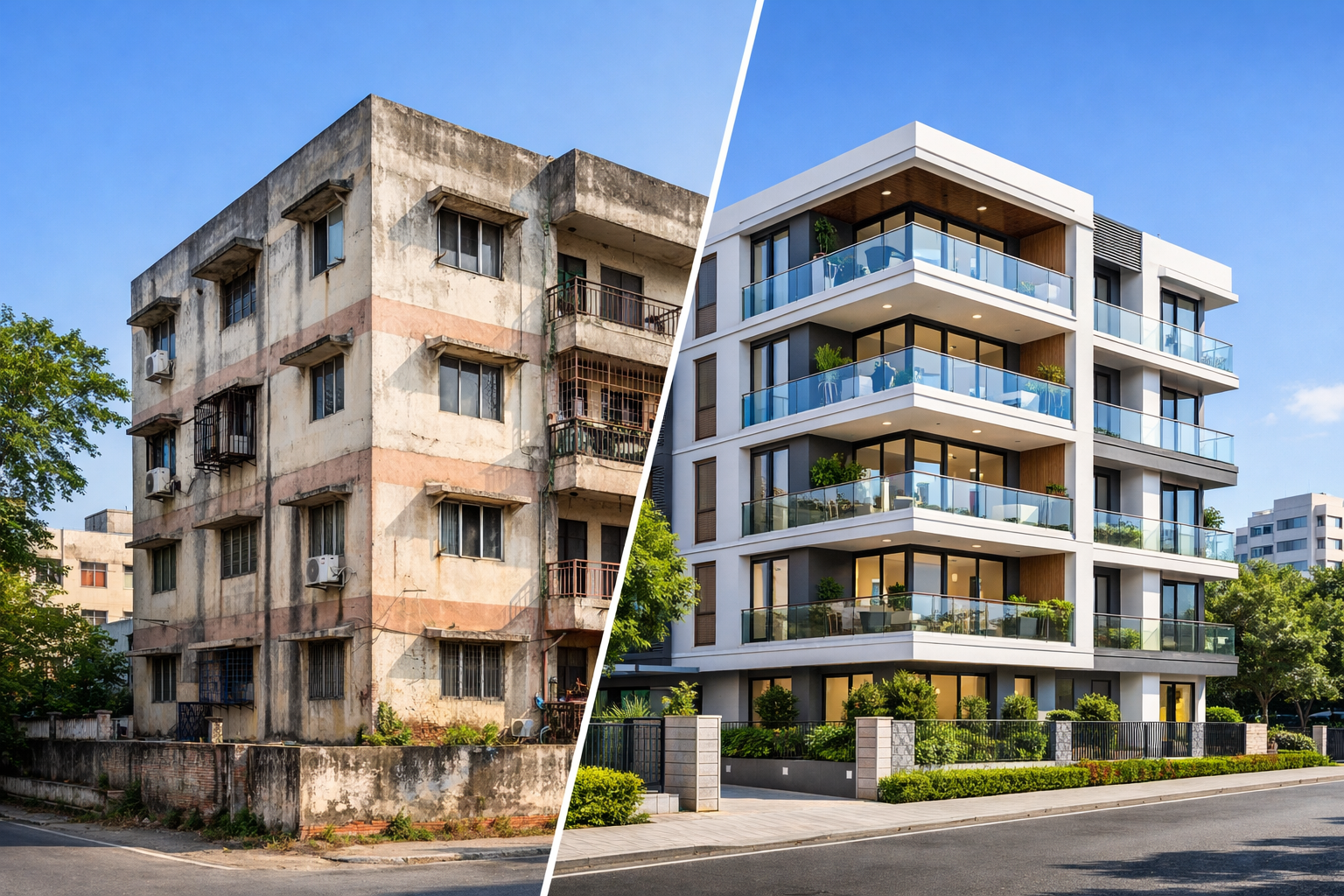
In many Chennai housing societies, the building is ready for redevelopment long before the residents are. The structural problems are visible. The repair cycles are exhausting. The case for reconstruction is clear. And yet, housing society consensus redevelopment Chennai remains one of the most stalled phases in the entire process — held up not by regulations or approvals, but by disagreement among the very people who stand to benefit most.
One reluctant owner, an unresolved inheritance dispute, or a single absentee flat holder can delay a project by months or longer. Understanding the legal consent requirements, the common objections, and the process for building genuine agreement is as important as understanding CMDA approvals or FSI norms.
Quick Answer
In Chennai, apartment redevelopment typically requires a minimum of 75 percent written consent from registered flat owners before a redevelopment agreement can be executed and submitted for CMDA approval. The exact threshold may vary based on the society’s registered bylaws. Consent must be documented formally — verbal agreement is not legally sufficient.
Why Consensus Is the Most Underestimated Phase
Redevelopment discussions in Chennai apartment buildings surface a specific set of anxieties that are entirely reasonable. Residents worry about the size of their replacement unit. They question whether the developer will honour commitments made before construction begins. They are uncertain about temporary relocation arrangements, timeline overruns, and what happens if the project stalls midway.
These are not obstacles to be overcome through persuasion. They are legitimate concerns that deserve honest, documented answers. Housing societies that treat the consensus phase as a box to tick — rather than a genuine process of informed agreement — tend to face legal challenges and resident conflicts that surface much later, often at the worst possible time.
The foundation of housing society consensus redevelopment Chennai is transparency — about the structural condition, the FSI calculations, the developer’s terms, and the realistic project timeline. [Internal Link: Structural Audit Services Chennai]
The Legal Minimum and What It Actually Means
Most Chennai housing societies registered under Tamil Nadu cooperative society or apartment ownership frameworks require 75 percent owner consent to proceed with redevelopment. Some societies with specific bylaw provisions may require higher thresholds. A legal review of your society’s registered documents is the starting point — not an assumption about what the standard is.
Consent must be collected in writing, with each owner signing a formal consent letter that specifies the terms they are agreeing to. General meeting minutes that record a voice vote are not equivalent to individual written consent for the purposes of a CMDA approval submission or a redevelopment agreement.
Ownership documentation must also be current. Chennai apartment clusters built in the 1980s and 1990s frequently have units where the registered owner is deceased, where ownership has passed informally through family arrangements, or where units have been sold without proper registration. Each of these situations requires resolution before that unit’s consent can be legally counted.
Building the Case for Reluctant Owners
The most effective approach to gaining owner support is information, not pressure. Reluctant flat owners typically fall into one of three groups.
The first group has genuine financial concerns — they are worried about corpus fund adequacy, relocation cost coverage, or the replacement unit area they will receive. These concerns are addressed through a clearly written redevelopment agreement with specific numerical commitments, reviewed by an independent legal advisor the society appoints separately from the developer.
The second group has trust concerns — they have heard of redevelopment projects that stalled or delivered less than promised. These concerns are addressed through reference checks on the developer, documented milestone-based payment structures, and engagement with a technically credible construction partner whose process can be independently verified.
The third group includes owners who are simply difficult to locate — NRI flat holders, inherited units with multiple legal heirs, or long-term tenanted properties where the owner’s contact details are outdated. These situations require persistent legal outreach and, in some cases, formal notice through registered post. [Internal Link: Redevelopment Process for Flat Owners Chennai]
The Sankar Infra Projects Approach
Sankar Infra Projects treats housing society consensus redevelopment Chennai as a structured project phase — not an informal precondition.
The process begins with a resident information session where the structural audit findings are shared openly. Flat owners see the actual condition of their building — not a sales presentation, but an engineer’s report. This single step changes the nature of the conversation. When residents understand the structural reality, informed discussion replaces abstract resistance.
From there, the team supports the society in structuring the consent documentation process — consent letter formats, society resolution templates, and coordination with legal advisors on ownership verification. Concerns about replacement area, corpus funds, and relocation are addressed in writing before the redevelopment agreement is finalised.
Sankar Infra Projects does not pressure residents or make commitments that the project cannot deliver. The goal is a consent process that is legally sound, individually informed, and genuinely voluntary — because projects built on reluctant or poorly documented consent carry risks that surface long after construction begins. [Internal Link: Apartment Reconstruction Services Chennai]
FAQ
How many owners need to agree for apartment redevelopment to proceed in Chennai? Most Chennai housing societies require a minimum of 75 percent written consent from registered flat owners. The exact threshold depends on the society’s registered bylaws. Legal review of your specific society’s registration documents is necessary to confirm the applicable requirement.
How do you convince reluctant flat owners to support redevelopment in Chennai? Address their specific concerns directly and in writing — replacement unit size, corpus fund terms, relocation arrangements, and construction timelines. Share the structural audit report openly. Engage an independent legal advisor the society controls. Pressure tactics rarely produce durable consent and often create legal complications later.
What is the legal minimum consent required for housing society redevelopment in Chennai? The legal minimum is typically 75 percent of registered owners, with individual written consent for each. Verbal agreements, general meeting voice votes, or proxy arrangements without proper legal documentation are not sufficient for CMDA approval submission or a legally enforceable redevelopment agreement.
What happens if one or two owners refuse to give consent in Chennai redevelopment? If the required consent threshold is met without those owners, the project can proceed legally in most cases. However, units belonging to non-consenting owners require careful legal handling. Seek specific legal advice for your society’s structure before proceeding in such situations.
Conclusion
Housing society consensus redevelopment Chennai is not a bureaucratic hurdle — it is the foundation on which the entire project rests. Consent that is informed, documented, and genuinely voluntary protects flat owners, protects the developer, and protects the project from disputes that can derail even well-planned reconstructions.
Getting this phase right requires patience, transparency, and process discipline. Sankar Infra Projects supports housing societies through every stage of the consensus process — from the first resident meeting to the final consent documentation. If your society is navigating this phase and needs structured guidance, reach out for a free consultation.
